It’s one of the questions I hear most from battery engineers:
“How much cell spacing do we need?”
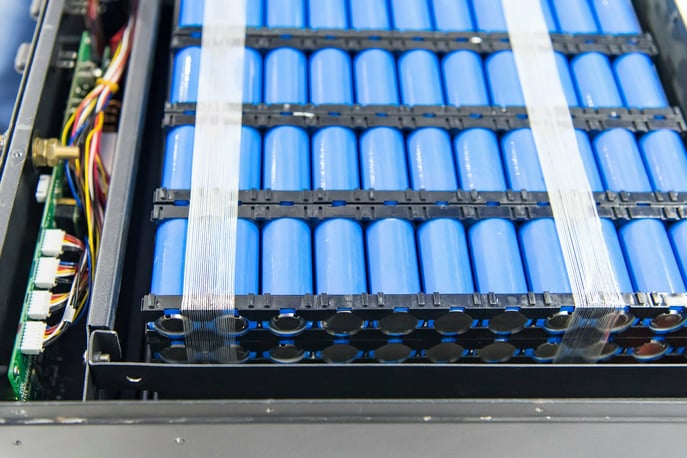
Cell spacing, in this case, almost always refers to cell-to-cell spacing (the gaps between cells within an array)—although it also includes the space between cells and surrounding pack components, including the housing.
Typically, cell spacing in Li-ion battery packs ranges from 0-4 mm, depending on application-specific demands for cooling, thermal runaway protection, and cell expansion.
The challenge is that these needs are balanced against volumetric energy density requirements of the overall battery pack.
In other words: everything needed for performance and safety must fit inside a limited space.
Why Proper Cell Spacing is Critical
What happens to Lithium-ion battery packs that are designed without sufficient spacing?
They’re likely to run into more issues, including:
1. Temperature Control
 During normal operation, airflow between battery cells helps cool the pack and maintain uniform temperatures throughout. Cells that are allowed to run hot, on the other hand, will degrade faster.
Therefore, it’s important to keep all cells within their optimal operating temperature range as well as ensure that cell temperatures near the center of the array do not deviate too much from those along the exterior. In other words, to maintain uniform temperatures throughout the pack.
Excessive temperature differences between cells within a pack will lead some cells to become voltage bottlenecks and degrade overall battery pack performance prematurely.
2. Thermal Runaway Protection
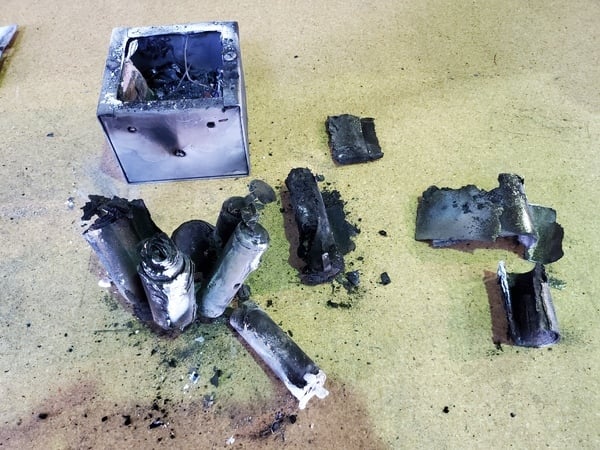
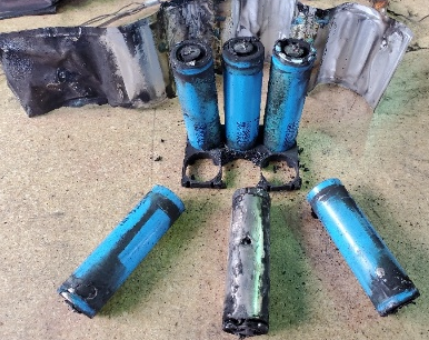
At a minimum, air gaps slow heat transfer between cells and provide a baseline level of thermal runaway protection.
For more robust thermal runaway protection, you’ll want to employ one or more of a variety of materials in the space between and/or around the cells. These include:
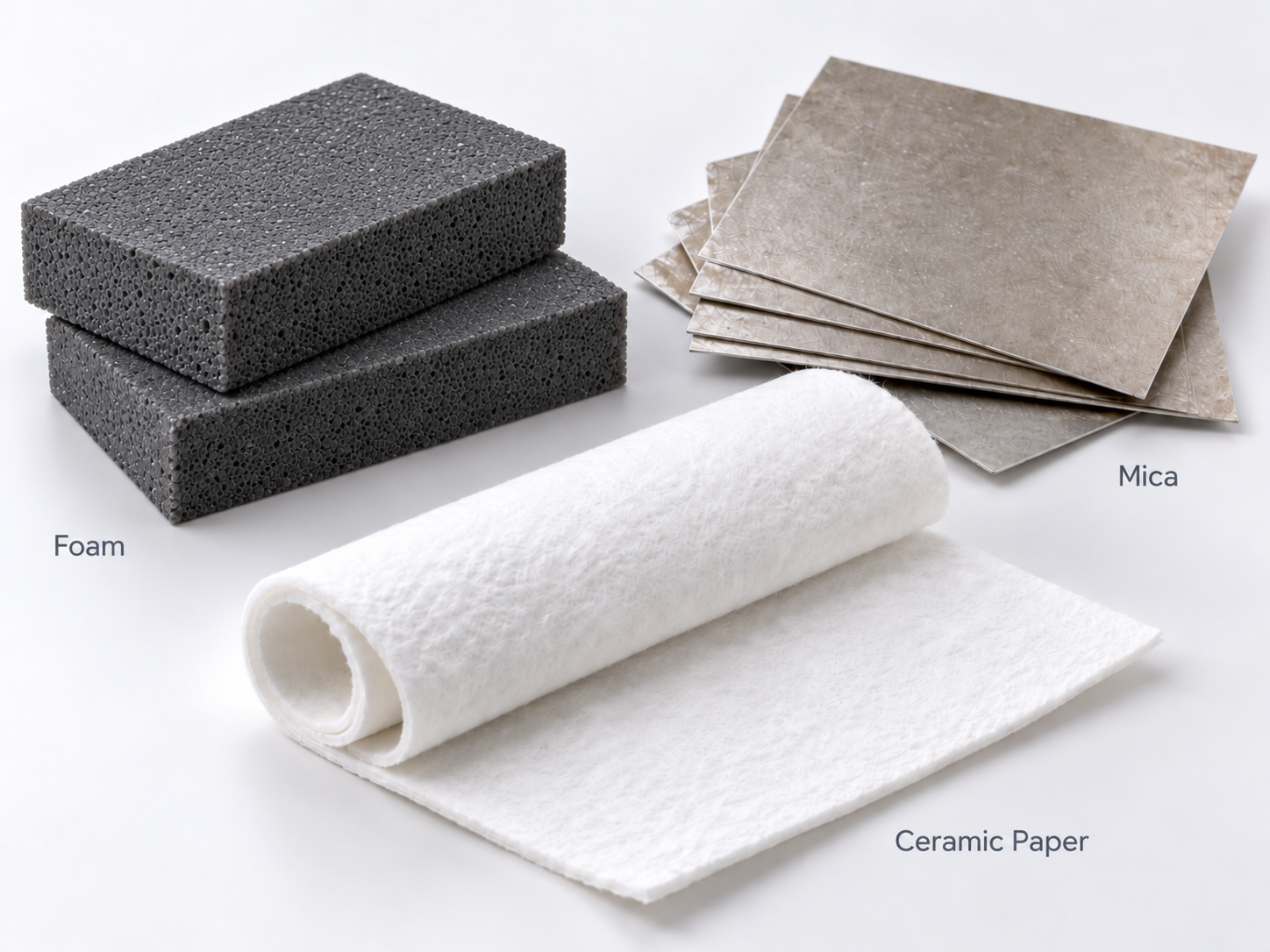
- Insulation materials (foams, etc.),
- PCMs
- Robust mechanical barriers with limited thermal protective capacity (mica, etc.).
This spacing is also essential for venting pathways, which play a key role in reducing the risk of thermal runaway. Clear pathways direct gases and ejecta safely away from neighboring cells and other sensitive components.
When designing your pack, it’s critical that you budget sufficient space, typically along the boundary between your cell’s safety vent locations and your battery pack’s housing structure.
Read more: Why Venting is Essential for Managing Thermal Runaway In Li-ion Batteries

3. Accommodating Cell Swelling
Unlike cylindrical cells, which are most commonly used, swelling is really only a major concern for prismatic and pouch-type cells.
These types of cells expand and contract significantly during typical charge/discharge cycles. Proper spacing is necessary to prevent these cells from damaging one another or surrounding pack components, often via the inclusion of compressible foam pads.
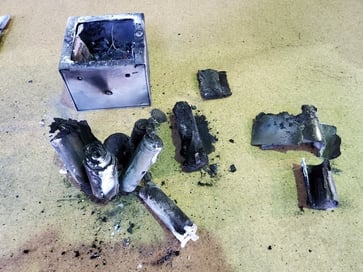
How to Prevent Thermal Runaway in Li-Ion Batteries
The Biggest Mistake that Battery Engineers Make with Cell Spacing
What’s the biggest mistake I keep seeing battery engineers make when designing cell packs?
Finalizing their cell-to-cell spacing too early.
Battery engineers want to keep cells from overheating during normal operations to allow for longer runtimes, improve overall battery lifespan, and facilitate fast charging.
However, too often, we see manufacturers run performance testing later in the design process and realize they need stronger protection from thermal runaway.
The problem?
There’s no room left in the pack for a solution—and they’re up against a deadline,
This can become even more challenging when other design elements are already locked in. In these cases, often the best we can do is implement suboptimal runaway controls and achieve only partial success. By partial success, I mean only delaying thermal runaway propagation rather than entirely preventing it, or preventing it only in some but not all test conditions.
Designers should instead decide what pack componentry and design philosophies are most appropriate for their application and let those dictate their cell spacing needs. And especially not overlook runaway mitigation concerns during that process.
How to Determine Your Cell Spacing Needs
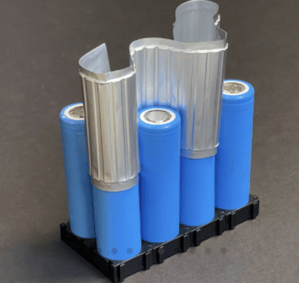 The next question becomes: how do you determine how much spacing your cells need?
The answer? It depends.
To determine how much spacing you need, it’s important to figure out what your priorities are early on, including:
- Are you going to incorporate active or passive cooling systems, and are these optimized for normal operations or runaway mitigation? These could include air gaps for passive or forced airflow, fins, liquid coolants, XTS®, or other PCMs. All have different spacing requirements.
- Are you going to incorporate thermal or mechanical barriers between cells, modules, or other components? These could include mica sheets, formed plastics, polyurethane foams, or other potting compounds. All have different spacing requirements, amongst their other trade-offs.
- Are you going to incorporate pathways for venting gases and particulate ejecta in the case of a thermal runaway event? This could include open headspace around cell terminals, pressure release valves, or deflector elements around sensitive components.
- If you’re planning to use prismatic cells, then you’ll also be accommodating compression pads in addition to all the other elements.
That’s why we recommend working with a trusted thermal management expert to finalize the specs for your next project.
The Essentials of Li-Ion Battery Pack Design
To prevent scenarios where you’re forced to retrofit a thermal management solution with limited space, it’s important to settle on a complete set of performance and safety criteria early on in the design process
Then, perform robust testing to ensure that your pack design can achieve those goals at your current cell spacing.
Only then should you finalize surrounding design elements such as overall battery pack housing dimensions, energy capacity, venting, flame suppression, insulation, and more.
To get the best results, work with a trusted expert who can help you with testing, design, and performance—with a thermal management solution that’s designed specifically for your pack.